
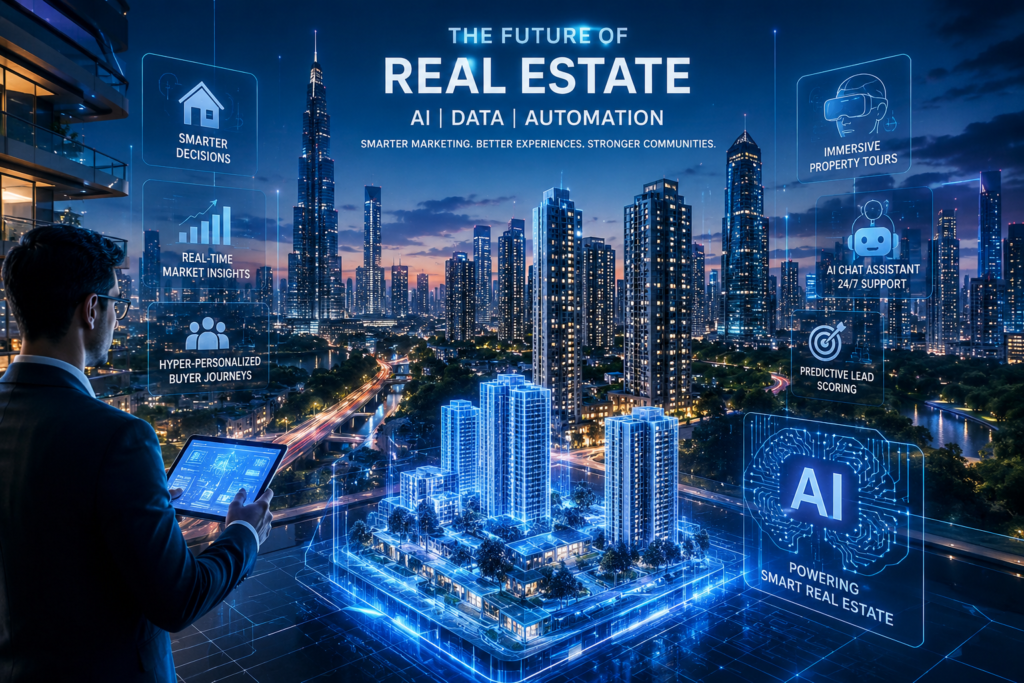
Introduction: A Market Undergoing Its Biggest Shift Yet
The future of real estate marketing in India is entering one of the most significant transformation phases the industry has ever seen.
Between 2026 and 2030, the way properties are marketed, sold, and even experienced will change completely. What once depended heavily on brokers, site visits, and hoardings is now shifting toward a system driven by AI, automation, digital platforms, and data intelligence.
A typical modern buyer no longer begins their journey at a sales office. Instead, they start online—searching, watching walkthrough videos, comparing prices, checking reviews, and interacting with developers through WhatsApp or chat systems.
This shift is not gradual anymore it is accelerating.
The rise of real estate digital marketing India has already begun reshaping how developers acquire customers. And over the next few years, this transformation will become the new normal across metros and Tier-2 cities alike.
In this blog, we will break down real estate marketing trends in India, explore AI’s role, understand buyer behavior shifts, and uncover what developers must do to stay competitive in the next decade.
Current State of Real Estate Marketing in India
The Indian real estate industry is still in a hybrid stage part traditional, part digital.
Most developers still depend on:
- Broker-driven sales networks
- Offline advertising like hoardings and newspapers
- Basic Facebook and Google ads
- Manual lead handling processes
While digital marketing is being adopted, it is often not structured or optimized.
The biggest issue is not lead generation it is lead quality and conversion efficiency.
Many companies struggle with:
- Poor CRM systems or no CRM at all
- Lack of follow-up automation
- High cost per lead from ads
- Weak SEO visibility
- No data-driven decision-making
This gap creates a massive opportunity for structured digital marketing for real estate developers who understand how performance systems actually work.
Future Real Estate Trends 2026–2030
The next five years will completely reshape the industry.
The future real estate trends 2026 show a strong shift toward intelligent automation and experience-driven marketing.
Key transformations include:
- AI-based lead scoring systems replacing manual filtering
- Automated multi-channel funnels (WhatsApp, email, SMS)
- Virtual and augmented reality property experiences becoming standard
- Real-time pricing and demand-based campaign optimization
- Hyper-personalized ads based on user behavior
For example, instead of showing the same apartment ad to everyone, AI will automatically show different layouts, prices, and messaging depending on the user’s income level, search behavior, and location.
This is the true future of real estate marketing in India where marketing becomes intelligent, not manual.
AI in Real Estate Marketing: The Real Game Changer

The role of AI in real estate marketing will expand far beyond chatbots and automation tools.
By 2030, AI will act as a full marketing assistant for developers.
AI will enable:
- Predicting which leads are most likely to convert
- Automatically scoring and prioritizing inquiries
- Running thousands of ad variations simultaneously
- Writing personalized follow-up messages
- Optimizing budgets in real time
- Recommending property options based on buyer intent
For example, if 1,000 people fill out a form, AI can instantly identify the top 50 who are most likely to book a site visit within 7 days.
Sales teams no longer waste time chasing cold leads.
This is where AI impact on real estate marketing in India becomes extremely powerful—it improves efficiency, reduces cost, and increases conversions simultaneously.
However, AI does not replace human sales teams. It enhances them.
High-value properties still require trust-building, negotiation, and emotional connection—something AI cannot fully replicate.
Digital Marketing for Real Estate Developers
Modern digital marketing for real estate developers is now the backbone of business growth.
The strongest channels going into 2026–2030 include:
1. SEO (Search Engine Optimization)
Ranking for high-intent keywords like “flats in Bangalore” or “apartments in Hyderabad” will continue to generate the highest-quality organic leads.
2. Google Ads
Search-based ads will remain the strongest paid acquisition channel due to high buyer intent.
3. Social Media Marketing
Instagram, Facebook, and YouTube will dominate discovery, especially for younger buyers.
4. WhatsApp Funnels
Instant communication and automated nurturing sequences will become essential for conversions.
5. Video Marketing
Walkthroughs, drone footage, and storytelling-based property videos will drive emotional engagement.
These channels collectively define real estate marketing trends in India and will continue evolving with AI integration.
Changing Buyer Behavior in India
Buyer behavior is the most important driver of change in the industry.
Modern homebuyers are:
- Highly research-driven
- Digitally active across multiple platforms
- Extremely comparison-focused
- Less dependent on brokers
- More trust-sensitive
A typical buyer now spends weeks or even months researching online before taking a site visit.
Interestingly, once they decide to visit, they are already 70–80% through their decision-making journey.
This makes early digital presence critical for developers.
The future real estate marketing in India will revolve around influencing buyers much earlier in their journey.
Role of Social Media, Video & Automation
Social media has evolved from a branding tool into a direct sales engine.
Key trends include:
- Instagram reels showcasing lifestyle-driven property content
- YouTube walkthrough channels gaining massive traction
- Drone videos for luxury developments
- Influencer collaborations in real estate niches
- Fully automated CRM-driven follow-ups
Video content is especially powerful because it builds emotional trust faster than static images.
Automation ensures that every interested lead is nurtured consistently without manual effort.
Why Traditional Marketing Is Becoming Less Effective
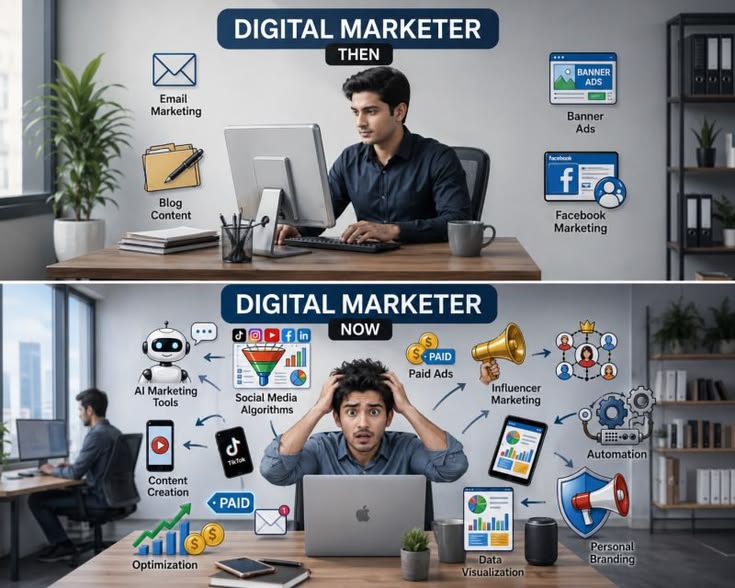
Traditional marketing methods are losing efficiency due to structural limitations:
- No tracking or attribution
- Low targeting precision
- High cost per impression
- Limited scalability
- Delayed response cycles
While not completely obsolete, traditional channels are no longer enough to drive growth.
Digital systems now dominate because they are measurable, scalable, and adaptable.
Opportunities for Real Estate Developers

The next decade presents massive opportunities for developers who adopt digital systems early.
Key advantages include:
- Lower customer acquisition cost
- Faster sales cycles
- Higher-quality leads
- Stronger brand authority
- Predictable pipeline generation
Tier-2 cities like Indore, Kochi, and Coimbatore will also see rapid digital adoption, making proptech trends India even more important.
Challenges in the Future of Real Estate Marketing
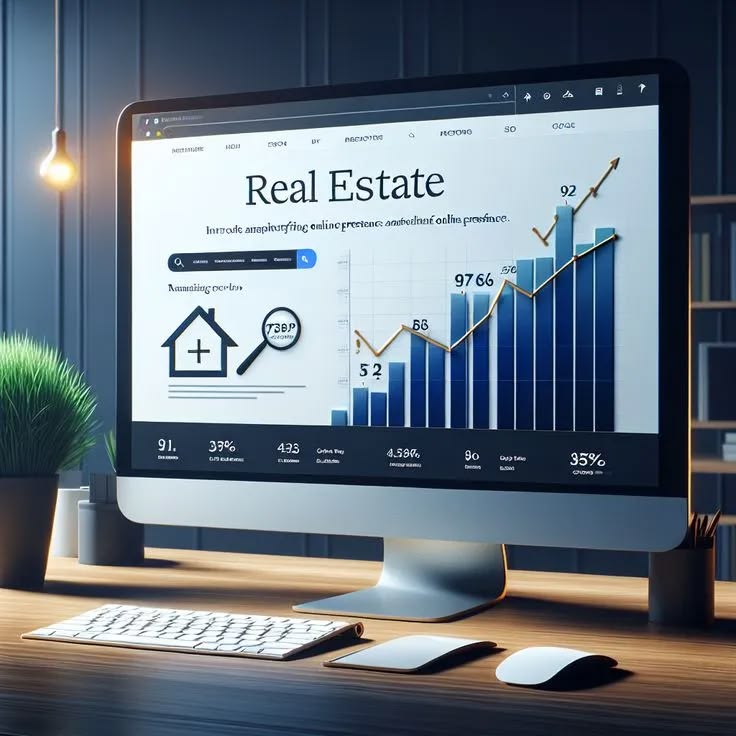
Despite growth, challenges will continue:
- Rising Google and Meta ad costs
- Increased competition across digital channels
- Shortage of skilled performance marketers
- Constant platform algorithm changes
- Data privacy regulations
Businesses that invest in structured real estate SEO services India and automation systems will handle these challenges better.
How Digital Marketing Agencies Help Real Estate Growth

A real estate lead generation agency India plays a critical role in scaling developers.
They help with:
- SEO strategy and ranking
- Paid advertising optimization
- Lead funnel creation
- CRM automation systems
- Conversion rate optimization
Agencies like Avani Studios help developers transition from random marketing efforts to structured, data-driven systems aligned with the future of real estate marketing in India.
Conclusion: The Future Is Already Here
The future of real estate marketing in India (2026–2030) is no longer theoretical it is already unfolding.
The industry is rapidly shifting toward AI-driven systems, digital-first discovery, and automated marketing funnels. Developers who adopt these systems early will dominate their markets, while others risk falling behind.
The biggest change is not technology it is behavior. Buyers have already moved online. Marketing is simply catching up.
The question is not whether this transformation will happen. The question is how fast you will adapt.